Depth Chart Deception: How Quoted Liquidity Vanishes the Instant You Commit Capital

Photo by Photo by André François McKenzie on Unsplash on Unsplash
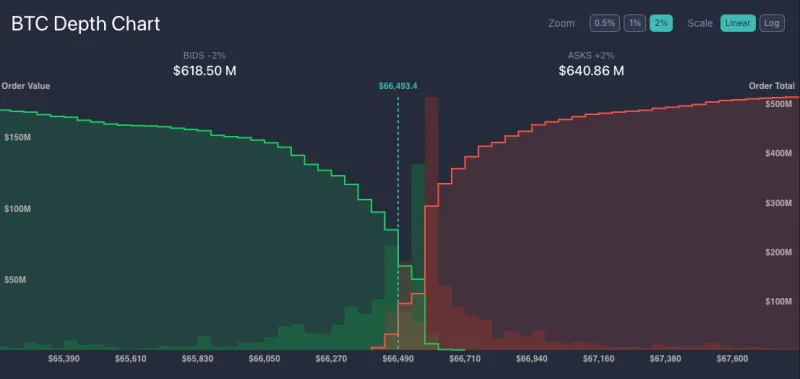
There is a moment familiar to nearly every serious DeFi participant: you review a token pair, the depth chart looks healthy, the quoted price appears favorable, and you confirm the transaction. Then the execution lands, and the fill price is meaningfully worse than anything the interface suggested. The liquidity you saw was, in some important sense, never truly there.
This is not a glitch. It is a structural characteristic of decentralized markets, and failing to account for it is one of the more costly recurring mistakes among traders who otherwise demonstrate considerable sophistication.
The Difference Between Displayed Liquidity and Executable Liquidity
On a centralized exchange, the order book represents binding commitments. A market maker who posts an offer at a specific price is contractually obligated to honor that price up to the posted quantity. Depth charts on those platforms reflect genuine, enforceable supply.
Decentralized exchanges operate under fundamentally different rules. Automated market makers, which power the majority of DEX volume, do not maintain order books at all. Instead, they use mathematical formulas—most commonly the constant product model—to determine price as a function of the ratio between two assets in a liquidity pool. The "depth" implied by a pool's total value locked is a theoretical construct, not a queue of waiting sellers.
When you execute a swap, your transaction moves along a price curve. The larger your trade relative to the pool's available reserves, the further along that curve you travel—and the worse your average fill price becomes. The depth chart displayed in most interfaces represents the shape of that curve at the current moment, but it cannot account for what else might happen between the time you see the quote and the time your transaction is confirmed on-chain.
Why the Quote Expires Before Your Transaction Does
Blockchain transactions are not instantaneous. From the moment you sign and broadcast a swap, your transaction enters the mempool, where it waits for inclusion in a block. That window—sometimes seconds, sometimes considerably longer during periods of congestion—is enough time for the underlying liquidity conditions to shift substantially.
Several forces can alter pool composition before your trade executes. Other traders may place swaps in the same direction, consuming liquidity ahead of you. Liquidity providers may withdraw capital entirely, shrinking the pool's depth. In concentrated liquidity models, like those pioneered by Uniswap v3, a large price movement can shift the active range so that the liquidity that was available at your quoted price no longer exists at execution time.
The result is that the price you were quoted represents a snapshot of a moving target. Your transaction, once confirmed, reflects conditions that may bear little resemblance to what you observed when you initiated the trade.
How Certain DEX Designs Obscure the Problem
Not all decentralized exchange architectures handle this transparency challenge equally. Some interfaces present aggregate quotes that pool data from multiple sources—combining several liquidity pools, multiple protocols, and even cross-chain bridges into a single number. This aggregation can create an illusion of depth that no single venue actually supports.
Concentrated liquidity pools are particularly prone to presenting misleading depth signals. Because liquidity providers can choose the precise price ranges within which their capital is active, a pool may show substantial total value locked while having only a thin band of active liquidity at the current price. If a trade pushes the execution price outside that band, it can suddenly encounter a dramatic drop in available depth—even though the overall pool figures looked reassuring.
Virtual AMMs and synthetic liquidity layers introduce additional complexity. Certain perpetual protocols and derivatives platforms simulate liquidity using mathematical constructs rather than actual deposited capital. The depth they display may have no direct relationship to what a spot swap would actually require.
Practical Methods for Measuring Real Executable Depth
Verifying true available liquidity before committing capital requires moving beyond what most standard interfaces display. Several approaches are worth incorporating into a disciplined pre-trade routine.
Simulate the transaction before signing it. Many wallets and interfaces now offer transaction simulation tools that model the expected outcome of a swap against current on-chain state. These simulations are more reliable than static quotes because they execute against live pool data rather than a cached snapshot. Reviewing the simulated output price and comparing it to the quoted price reveals the actual expected slippage before any capital is at risk.
Examine on-chain pool data directly. Block explorers and DEX analytics platforms allow traders to inspect individual pool contracts, reviewing current reserve levels, recent swap history, and liquidity distribution across price ranges. For concentrated liquidity pools specifically, visualizing the active liquidity distribution—not just total value locked—gives a far more accurate picture of available depth at the current price.
Use limit orders where the protocol supports them. Rather than accepting whatever price a market swap delivers, placing a limit order specifies the exact price at which you are willing to transact. If that price is unavailable, the order simply does not fill. This eliminates the risk of execution at a dramatically worse price than anticipated, at the cost of some immediacy.
Scale trade size relative to pool depth. A useful rule of thumb is to target a maximum price impact of no more than 0.5 to 1 percent for any single swap. Most DEX interfaces display estimated price impact before execution. If that figure is elevated, breaking the trade into smaller tranches—executed across different time intervals or routed through multiple pools—can substantially reduce the gap between quoted and actual fill prices.
Monitor mempool conditions before large transactions. During periods of high network activity, transaction confirmation times lengthen and the window during which conditions can shift expands. Timing large swaps for periods of lower congestion, or using protocols that offer private transaction submission to minimize front-running exposure, can reduce the volatility of execution outcomes.
The Discipline That Separates Consistent Traders from Reactive Ones
Phantom liquidity is not a problem that will be engineered away entirely. It is an inherent consequence of how decentralized markets function: prices are continuous, block confirmation is not instantaneous, and liquidity is dynamic. The traders who consistently achieve fills close to their expected prices are not those who assume the quoted price is reliable—they are those who have built verification into their standard workflow.
At Linea Swap, the infrastructure is designed to surface the most accurate available execution data and route swaps through the deepest genuine liquidity sources accessible at any given moment. But even the best routing cannot substitute for a trader who understands what they are looking at before they click confirm.
The depth chart is a map, not the territory. Learning to read the difference is what separates a quote from a result.