Vanishing Depth: How to Spot a Dying Liquidity Pool Before It Traps Your Capital
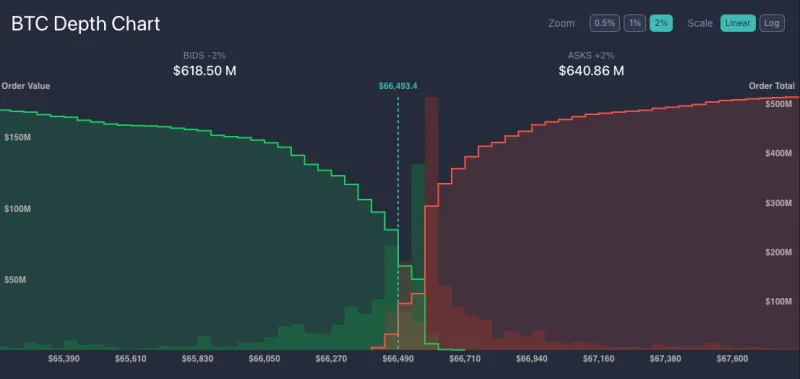
Photo: abstract digital liquidity pool draining cryptocurrency trading depth chart, via images.ctfassets.net
When the Market Disappears Mid-Trade
There is a particular kind of frustration reserved for traders who have done their homework—identified a promising token pair, confirmed a favorable entry, and then watched their transaction either fail outright or execute at a price far removed from what the interface displayed. This is not always slippage in the conventional sense. Often, it is something more structural: liquidity that was present one moment and effectively absent the next.
In centralized exchange environments, market makers are contractually obligated to maintain bid-ask spreads within certain tolerances. Decentralized exchanges operate under no such obligation. Liquidity providers enter and exit pools based on their own incentive calculations, and when those calculations shift—as they frequently do—the market depth supporting your favorite token pair can thin out with startling speed.
Understanding why this happens, and how to detect it before it affects your positions, is one of the more underappreciated skills in the DeFi trader's toolkit.
The Mechanics of Liquidity Migration
Liquidity on decentralized exchanges is not static. It is a competitive resource that moves toward the highest available yield. When a new protocol launches an aggressive incentive program—often in the form of elevated token emissions for liquidity providers—capital migrates. The pool that served your ETH/USDC trades efficiently last week may be operating at a fraction of its former depth today because its LPs have rotated into a newer, higher-yielding opportunity elsewhere.
This migration dynamic is compounded by the fragmented nature of the DEX landscape. Unlike traditional markets, where liquidity tends to consolidate around dominant venues, DeFi distributes trading activity across dozens of protocols, each running its own automated market maker logic, its own incentive schedules, and its own user base. A token pair that enjoys robust liquidity on one platform may be nearly absent on another, and the difference matters enormously when you are executing a trade of any meaningful size.
Concentrated liquidity models—popularized by Uniswap v3 and adopted by several competing protocols—have introduced an additional layer of complexity. Liquidity providers in these systems allocate capital within specific price ranges rather than across the entire price curve. When an asset moves outside the range where most capital is concentrated, effective liquidity collapses. The pool still exists on paper, but its functional depth at the current price may be negligible.
Warning Signs Every Trader Should Monitor
Recognizing a deteriorating liquidity environment requires attention to several measurable signals, most of which are accessible through on-chain analytics platforms and DEX aggregator dashboards.
Total Value Locked Trends. A sustained decline in TVL for a specific pool is one of the clearest indicators of LP exodus. A single-day drop may reflect normal rebalancing; a multi-week downtrend paired with reduced trading volume is a more serious signal. Monitoring TVL on a per-pool basis—rather than at the protocol level—provides considerably more granular information.
Price Impact at Realistic Trade Sizes. Most DEX interfaces display price impact estimates, but traders often overlook what those estimates imply at their actual position size. Testing the impact of a swap equivalent to your intended trade size, rather than a nominal amount, will reveal how much depth genuinely exists. A pool showing 0.1% price impact on a $500 swap may show 3% or more on a $50,000 swap—a distinction that matters significantly to any serious participant.
LP Token Withdrawal Velocity. On-chain data can reveal the rate at which liquidity provider tokens are being burned or redeemed. An acceleration in LP withdrawals—particularly from a small number of large addresses—often precedes a meaningful reduction in pool depth. Several analytics platforms allow users to track wallet-level LP activity for major pools.
Incentive Program Expiration Dates. Many pools maintain their liquidity primarily because of active token rewards. When those programs conclude, LPs have diminished reason to remain. Tracking the emission schedules of protocols where you regularly trade allows you to anticipate liquidity contractions rather than react to them.
Bid-Ask Spread Widening in Aggregator Quotes. DEX aggregators that route trades across multiple pools can serve as indirect indicators of market depth. When the best available quote for a given pair begins deteriorating relative to historical norms—even without a significant price movement in the underlying asset—it often reflects thinning liquidity across the pools the aggregator draws from.
Practical Strategies for Protecting Your Exits
Awareness of liquidity risk is only useful insofar as it informs concrete trading decisions. Several approaches can help traders maintain access to viable exits even as market conditions shift.
Establish Exit Plans During High-Liquidity Periods. The optimal time to identify your exit route is before you need it. When entering a position in a less liquid token, map out which pools and protocols you would use to exit at various price levels, and verify that sufficient depth exists at each. Revisit this analysis periodically, particularly if the position is held for an extended duration.
Size Positions Relative to Pool Depth. A useful rule of thumb is to limit any single trade to a percentage of the pool's TVL that keeps price impact within your acceptable tolerance. For most traders, this means avoiding positions that represent more than one to two percent of a pool's total liquidity without a clear plan for staged execution.
Use Aggregators with Real-Time Routing. Aggregators that dynamically route trades across multiple pools at execution time provide a degree of insulation against single-pool liquidity failures. When one pool thins out, the aggregator redistributes the order flow. This does not eliminate liquidity risk, but it reduces exposure to any single point of failure.
Monitor Protocol Governance Proposals. Decisions that affect liquidity incentives—such as gauge weight votes on Curve or Balancer, or fee tier adjustments on concentrated liquidity platforms—are made through on-chain governance before they take effect. Traders who follow these discussions gain advance notice of structural changes that could affect the pools they rely on.
Turning a Hidden Risk Into a Competitive Advantage
Most retail participants in DeFi markets pay little attention to liquidity dynamics until they experience a painful trade execution. This inattention creates an opportunity for traders who are willing to do the analytical work.
A trader who identifies a pool approaching critical liquidity thresholds can exit positions cleanly while depth still exists, avoiding the price impact and potential slippage that will affect less-informed participants when the situation deteriorates further. In some cases, anticipating liquidity migration can also inform directional views on asset prices, since tokens losing LP support often face additional selling pressure as the market structure weakens.
DeFi markets reward preparation. The tools to monitor liquidity health are largely free and publicly accessible. What separates traders who use them from those who do not is simply the discipline to look before executing—and the understanding that in decentralized markets, the depth displayed on your screen today is not a promise about what will be there tomorrow.